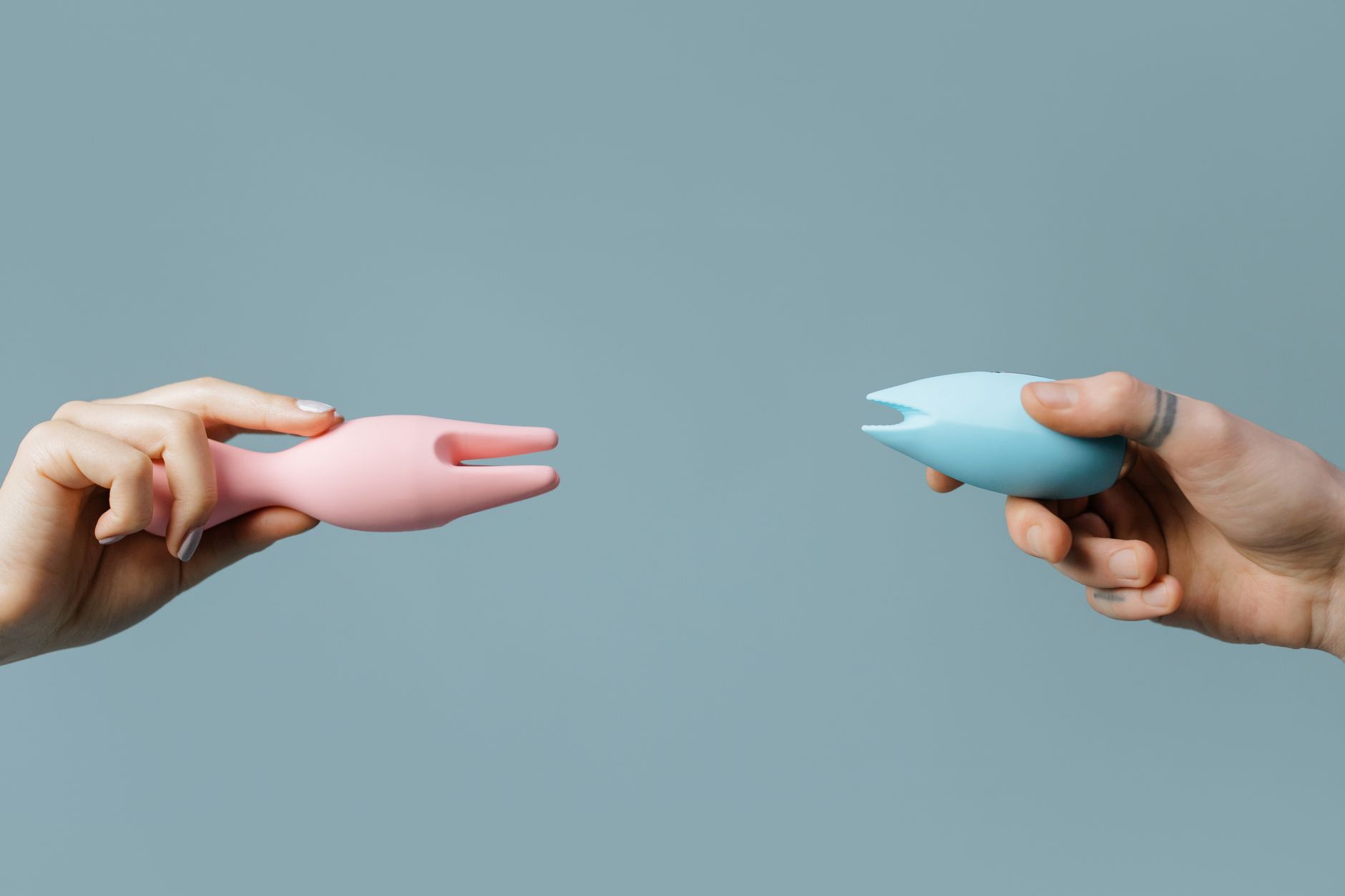
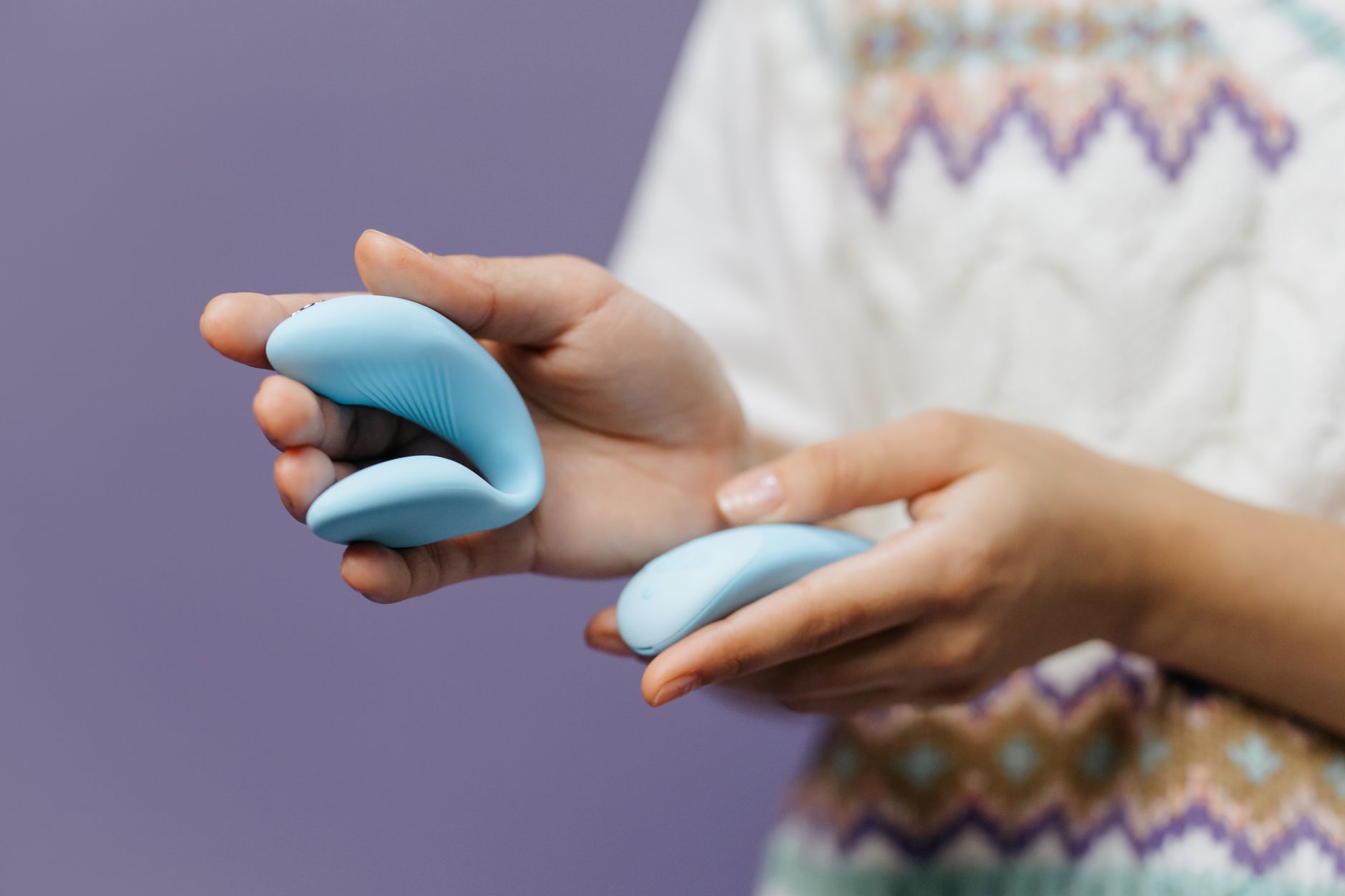
How to Use Lemon Vibrators When You Have a New Partner and Old Habits
Your solo routine isn't wrong. But your new relationship deserves a different approach. Here's how lemon clitoral vibrators bridge the gap between what you've trained your body to want and what actual partnership can offer.
You've spent years, maybe decades, knowing exactly how to make yourself come. Your hand knows the pressure. Your mind knows the pace. Your body has learned what works, and it works reliably. Then a new partner arrives, and suddenly that familiar certainty vanishes. Your body doesn't respond the same way to touch that isn't yours. Orgasms that came easily alone now feel impossible with someone else in the room.
This isn't a personal failure. It's not because you love them less, or because something is broken. It's because pleasure is habit, and you're trying to break a very old, very effective habit while building a new one simultaneously. That's genuinely difficult.
The good news: lemon vibrators are built for exactly this transition.
When you masturbate, you're working with perfect knowledge. You know your exact pressure tolerance, your rhythm, the angle that works. You're not managing anyone else's ego or comfort. You're not performing. You're not negotiating speed or intensity in real time.
Partner sex adds layers: you're reading their responses, managing their pace, gauging their stamina, and often unconsciously performing a version of pleasure that feels safer than your actual need. Your nervous system is more activated in a different way. And if you've spent years training your body to respond to a specific type of stimulation (usually firmer pressure than a partner's hand or most traditional vibrators can sustainably deliver), that nervous system doesn't automatically switch gears.
What makes this harder is that the problem often reads as "I can't come with them" when the real problem is "my body has learned a very specific input, and my nervous system needs a bridge to experience pleasure differently."
Lemon clitoral vibrators work differently than traditional vibrators because they use suction instead of direct vibration. That matters here for three reasons.
First, suction sensation is novel to your nervous system. If you've been relying on a firm grip for years, suction engages your pleasure pathways in a slightly different way. It's not exactly like your hand, but it's also not exactly like a traditional vibrator. That novelty is actually useful. It can help reset some of the specificity your body has developed around solo stimulation.
Second, the lemon vibrator's sensation is gentler to build with. If you're learning to respond to a partner's touch, gentler initial stimulation helps your body warm up to lighter sensations. You can use the lemon vibrator at low settings during partnered play, which trains your nervous system that pleasure doesn't require the grip pressure you've been using.
Third, you can use a lemon vibrator with a partner present. You're not replacing partner touch entirely. You're introducing a middle ground: something that's not your hand, not their hand, but something you can both control and understand together.
Here's what I recommend to clients navigating this exact situation.
Week one: Solo exploration with new sensation. Use your lemon clitoral vibrator alone, but deliberately use lower patterns than you think you need. Start at pattern 1 or 2. Spend 5-10 minutes on each session just getting familiar with how suction feels. Don't chase orgasm. You're rewiring, not achieving.
Week two: Introduce partner presence. Masturbate with your lemon vibrator while your partner is in the room, initially just present. No touch required yet. Let your nervous system adapt to pleasure while they're watching. This sounds clinical, but it's genuinely how you teach your body that arousal is safe with them nearby.
Week three: Add partner touch alongside the vibrator. This is key. Your partner touches you (hands, mouth, whatever you both want) while you use the lemon vibrator on lower settings. The combination of their touch plus the vibrator's suction is weaker than your solo grip, but it's also more complex. Your nervous system has to integrate multiple sensations, which teaches it that pleasure doesn't live in a single, high-pressure input.
Week four and beyond: Gradually reduce the vibrator intensity. As you get comfortable with partner touch plus vibrator, lower the pattern settings. Move from pattern 3 to pattern 2. The goal isn't to eliminate the vibrator, but to make your body responsive to weaker sensations overall.
Many people in this situation feel shame. You think you should be able to come from partner touch. You think your body is the problem. This often creates a barrier to actually talking about what's happening.
Here's what I tell my clients: frame this not as "I have a problem" but as "I want us to build something new together, and it's a project." The difference in language matters. One sounds like failure. The other sounds like partnership.
You might say something like: "I've developed really specific habits around solo pleasure, and I want to rewire that with you. I'm going to use a vibrator during sex for a while, and I'd love your help. It's not because your touch isn't enough. It's because I want to expand what my body can experience with you." Most partners respond to that framing because it's honest and collaborative.
The lemon vibrator isn't meant to be permanent. It's a tool for transition. Some people find they come to prefer partnered sex with the vibrator and that's fine. Others use it for six months and then realize their body has adapted enough that they don't need it. Both outcomes are valid.
What matters is understanding that using a vibrator during partnered sex isn't a sign that something is wrong with you or the relationship. It's evidence that you're being intentional about pleasure instead of just hoping it happens. Couples who communicate about tools and sensation actually have better, more consistent sex lives than couples who pretend those tools don't exist.
If you're using a lemon clitoral vibrator specifically, the lower, pulsing patterns tend to work better during this transition than the constant-hum patterns. Pattern 1 or 2 creates rhythmic stimulation that your nervous system can anticipate, rather than the overwhelming constant sensation of higher patterns. Many people find that pulsing patterns also feel more compatible with partner rhythm, since there's a natural on-off tempo you can both sync to.
Start with 5-10 minutes of combined partner touch and lemon vibrator stimulation. Don't aim for orgasm in early sessions. You're teaching your nervous system that pleasure is possible in this new configuration, not demanding results.
Some people reset within 6-8 weeks. Others take 4-6 months. There's no normal, and there's no timeline you're falling behind on. Your nervous system learned a specific pattern over years. It's not lazy or broken if it takes time to integrate new sensations.
If after three months of consistent use you're still not experiencing any difference, it's worth checking in with a sex-positive therapist or a provider trained in sexual function. Sometimes there are other factors at play: depression, medication side effects, relationship dynamics that aren't safe, or past trauma. A vibrator alone can't fix those, but a professional can help you address what's underneath.
Q: Is using a vibrator during partnered sex cheating or avoiding real intimacy?
No. Using a tool to enhance sensation is a form of communication, not avoidance. You're actively engaging with your partner and your pleasure. That's the opposite of avoidance.
Q: If I can only come with a vibrator, does that mean I can never come from partner touch alone?
Maybe, maybe not. Some people retrain their nervous system completely. Others find they prefer vibratory stimulation always. What matters is whether you're satisfied with your sex life, not whether it matches some imaginary standard.
Q: How do I bring this up without making my partner feel inadequate?
Reframe it as a joint exploration project, not as a problem with them. "I want to explore new ways of pleasure together" lands very differently than "I can't come from your touch."
Q: Should I use the lemon vibrator solo while I'm in this transition?
Yes. Solo use helps you stay comfortable with your own pleasure while you're learning partnered sensation. It's not competing with your relationship. It's supporting it.
Q: What if my partner feels threatened by the vibrator?
That's worth a deeper conversation. Some insecurity is normal and can be addressed with reassurance and time. If your partner consistently refuses to engage with your pleasure needs, that's a relational issue beyond what a vibrator can solve.
Q: How long before I can stop using the vibrator during sex?
There's no expiration date. Some people use vibrators in partnered sex for life. That's completely fine. If you want to reduce reliance, do it gradually. Lower the pattern settings first, then reduce frequency. Don't suddenly remove it and expect your body to have magically adapted.
What I've noticed with clients who successfully navigate this transition is that the shift isn't really about the vibrator. It's about permission. Permission to use tools. Permission to need something different than what your partner's hand can deliver. Permission to have a body that's learned something specific and needs time to unlearn it.
Your body isn't broken. Your pleasure habits aren't shameful. And a new relationship is absolutely worth the work of rewiring what you've learned about sensation. The lemon vibrators are designed exactly for this kind of transition, and using them intentionally with a partner is one of the most honest conversations a couple can have about desire.
Ready to have that conversation? Reach out if you want guidance navigating communication around toys in partnerships, or if you have questions about how to approach this specific situation.